How We Manage Risk
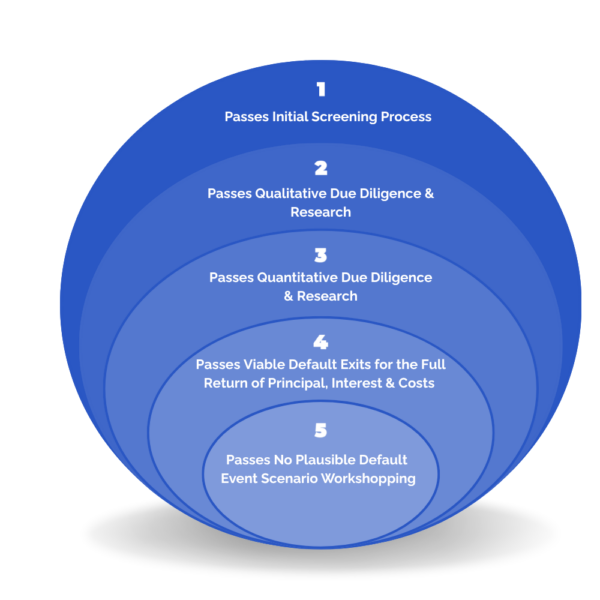
Our unique approach to risk involves constantly refining our processes to prevent all risks from the start through research, evidence, and workshopping scenarios that might lead to an event of default.
CRAFT is committed to providing reliable returns for investors, even during times of economic stress, by applying disciplined investment and risk management, insights from its industry operational expertise, and a strong focus on prioritising security of capital and investors’ needs above all else.
The last three miles of commodity supply chain finance is among the safest types of lending globally. CRAFT uses its expertise to pick only the top private credit risks in its market segment, giving investors chances to benefit from the economic growth and stability of some of the world’s most successful companies, in the real economy regardless of market conditions.
Qualitative Due Diligence – An investigative method aimed at identifying supply chain vulnerabilities across various market conditions. This process leverages our deep industry, operational, and market knowledge and is intended to complement traditional quantitative lending approaches by identifying risks they might overlook. It aims to prevent default events that happen when the right circumstances arise at the wrong time for a producer.
Quantitative Due Diligence – An investigative approach that is a common part of the typical due diligence process most lenders would undertake to verify and evaluate a company’s ability to meet their obligations. However, with this method, we draw on our extensive industry, operational, and market knowledge to determine whether and how external factors could impact the capacity to pay, even if the right circumstances occur at an inopportune time for their business.
Most companies obtain funding through quantitative means, but this doesn’t tell the full story about risk since decision-making often assumes normal market conditions will last for the entire duration of their obligation.
Our approach to managing capital is to minimise risk by supporting only companies and their supply chains that pass our qualitative, quantitative, and default-even-scenario workshop processes.
Typical Trade Flows
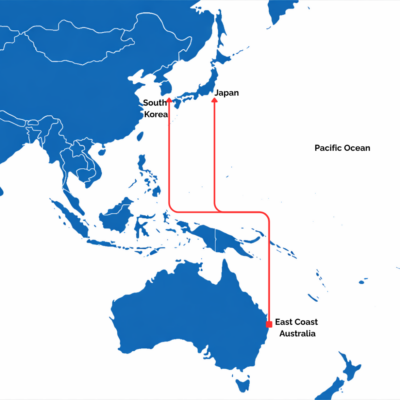
As part of our risk management objectives, CRAFT supports commodities supply chain systems in the safest regional jurisdictions, typically a one-way trade from Australian companies producing commodities for customers predominantly in Japan and South Korea.
CRAFT actively avoids commodity supply chain systems which have the potential for being impacted from geopolitical events such as the Middle East and East African shipping routes.